

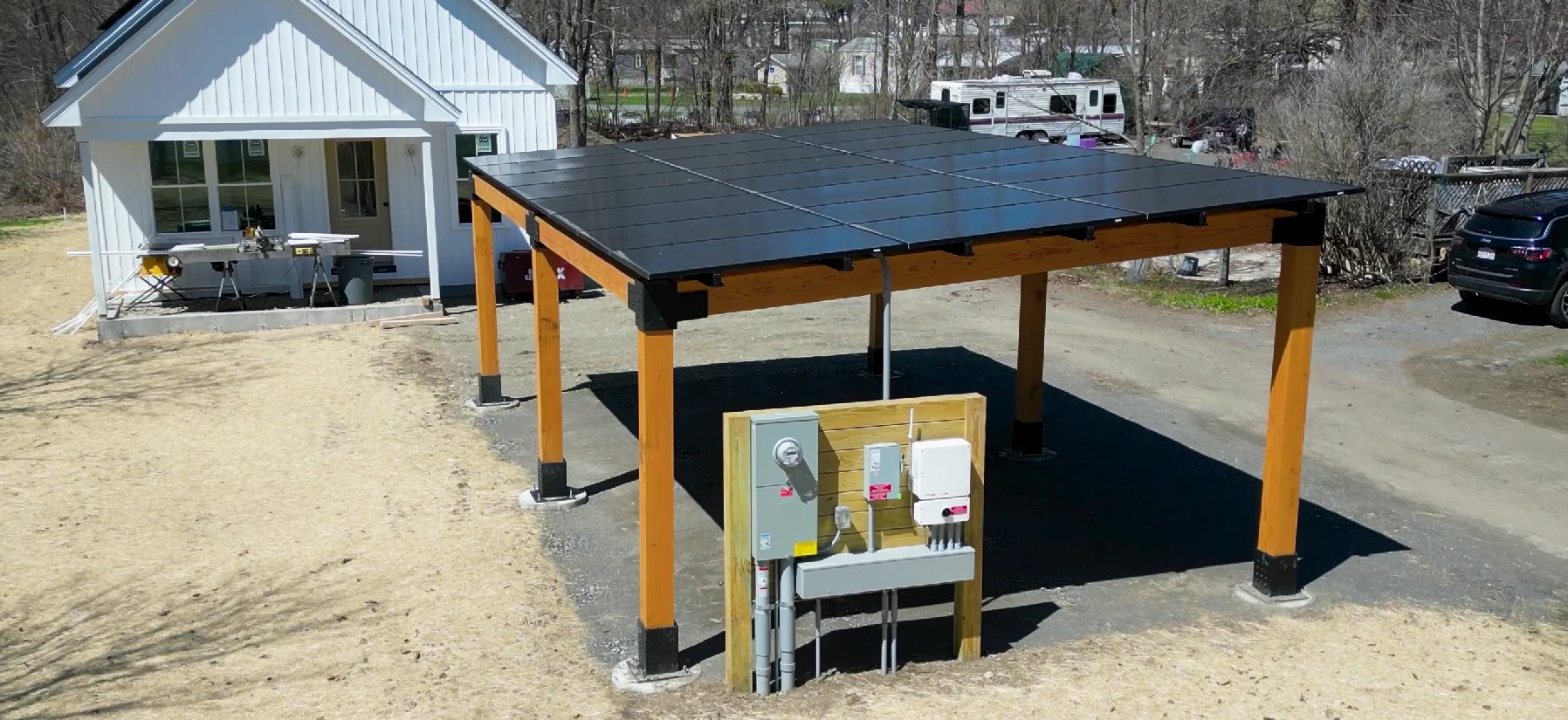
DIY Solar Carports: A Practical Guide for Homeowners
A DIY solar carport, canopy, or pergola can be one of the most practical ways for homeowners to add solar power to their property, especially if roof space is limited or if you enjoy taking on hands-on building projects.
Many people assume that installing solar always requires hiring a full-service installer, and in many cases that’s true. Traditional residential solar projects often involve complex design work, engineering reviews, permits, and utility interconnection requirements that make professional installation the easiest path.
However, there are situations where a capable homeowner or builder can take on part of the project themselves. Ground-mounted solar structures like solar pergolas and solar carports are often the most approachable option because their construction resembles standard outdoor building projects more than specialized electrical work.
What Is a Solar Carport or Solar Canopy?
A solar carport is a freestanding structure that supports solar panels above a driveway, parking area, or outdoor space. Instead of installing panels on a roof, the solar array is mounted on a canopy built from posts and beams. These structures often serve two purposes at once: generating electricity while creating shaded space for vehicles or outdoor areas. Because the structure resembles a large pergola or pavilion, the construction process is often more familiar to builders than rooftop solar work.
Who Should Consider a DIY Solar Canopy?
DIY solar canopy projects work best for homeowners with construction or carpentry experience who are comfortable working from engineering drawings. Structural beams can be heavy, so access to lifting equipment or extra help is often necessary. Many people take a hybrid approach—building the canopy structure themselves and then working with a licensed electrician or solar installer to handle the electrical connections and utility interconnection.
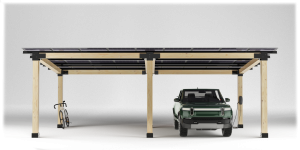
Solar Canopy Kits from Brooklyn Solar Canopy Co.
Brooklyn Solar Canopy Co. designs canopy systems that simplify solar structures while meeting structural engineering requirements. One option is the Wood Post Canopy, which combines locally sourced lumber with the Brooklyn Solar Canopy Co. engineered aluminum hardware. The kit includes structural brackets, solar mounting rails, stainless steel fasteners, and a detailed plan set. Using locally sourced beams keeps shipping costs down while allowing the structure to be built with readily available materials. For builders who prefer a fully engineered frame, the post-truss aluminum canopy offers a lightweight modular structure designed for bolted assembly. Both systems are designed to make building a solar canopy more approachable while maintaining the structural strength required for solar arrays.
How DIY Solar Carports Are Built
Most projects begin with site planning, where the canopy footprint is laid out according to the engineering drawings. The builder then digs a foundation and pours concrete footings to anchor the structure. After the concrete cures, posts and beams are installed to form the structural frame. Because beams can weigh over 200 pounds, many builders use hoists or additional help to lift them into place. Once the frame is complete, solar mounting rails attach to the beams. Panels then clamp directly onto the rails, creating the finished solar array. At this stage, a licensed electrician or solar installer typically handles the electrical system and utility interconnection.
A Real Example
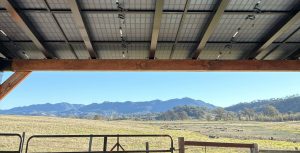
We recently shipped a canopy kit to George in California. A former general contractor, George brought years of construction experience to the project and built the structure with help from a few friends. Once the canopy was assembled, a local solar installer assisted with the electrical work and utility interconnection.


Common Questions
Do solar carports require permits?
Yes. Because they are freestanding structures, solar carports typically require building permits and structural engineering approval.
Can a solar carport power a house?
Depending on the number of panels installed, a solar canopy can offset a significant portion of a home’s electricity use.
Can a solar carport charge an EV?
Yes. Many homeowners install solar carports specifically to generate electricity for electric vehicle charging.
When a DIY Solar Carport Makes Sense
For homeowners who enjoy building projects, a solar canopy can combine construction with renewable energy. The structure resembles a traditional outdoor build, while the solar array provides long-term energy savings. Brooklyn Solar Canopy Co. works with homeowners, builders, and installers across the country exploring DIY solar carports, solar pergolas, and canopy systems as a way to make solar more accessible.